Showing posts with label Buildings. Show all posts

Thursday, August 14, 2014

Energy Efficiency among the World's Largest Economies


The American Council for an Energy-Efficient Economy (ACEEE) acts as a catalyst to advance energy efficiency policies, programs, technologies, investments, and behaviors. The group recently released its 2014 International Energy Efficiency Scorecard that includes analysis of 16 of the world’s largest economies that together represent more than 81% of global gross domestic product and 71% of global electricity consumption.
 
 
In considering overall energy efficiency, ACEEE used 31 policy and quantifiable performance metrics across four groupings: energy use at the national level as well as the three sectors primarily responsible for energy consumption – buildings, industry, and transportation.
 
The top rankings went to: 1st – Germany; 2nd – Italy; and 3rd – the European Union. The United States ranked 13th.
 
The 2014 International Energy Efficiency Scorecard website includes the complete report, executive summary, press release, and additional information.

Wednesday, April 16, 2014

Energy Efficiency Opportunities in U.S. Cities

The United States Conference of Mayors (USCM) is the official non-partisan organization of cities with populations of 30,000 or more. According to usmayors.org, there are 1,393 such cities in the U.S. today.

During their 82nd Winter Meeting in Washington, D.C., in January, the USMC unveiled the results of a survey in which nearly 300 cities provided data about how they are deploying energy technologies to make their city operations and communities more energy efficient. The full report is available – Energy Efficiency and Technologies in America’s Cities – as is a related press release.
 
 
Among a number of key findings, the report lists the following areas currently targeted by cities for energy efficiency, along with the percent of cities reporting each; up to three responses per city were possible: 
  • Public Buildings (83%)
  • Outdoor Lighting (54%)
  • Wastewater Treatment (21%)
  • Water Supply (20%)
  • Traffic Management on Roads (16%)
  • Public Transit (16%)

Wonderware software solutions help smart cities better manage their infrastructure operations, including their energy efficiency, across diverse applications like facility/building management, water and wastewater, and transportation.

Tuesday, March 11, 2014

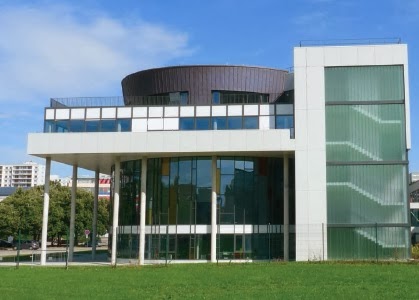
Managing Facility Operations for 140 Buildings Across Multiple Campuses at the University of Strasbourg in France

The University of Strasbourg in Strasbourg, France, is among Europe’s foremost research universities and is the second-largest university in France with some 43,000 students. The University’s Energy Department needed to better manage facility operations for 140 buildings on multiple campuses spread across 60 miles of Strasbourg and the surrounding area. No centralized method existed for monitoring and collecting data on assets, HVAC, electricity and other facility processes that would allow staff to review trends and identify better practices for saving time, money and energy.


"Wonderware System Platform enables the University’s Energy Department to successfully manage operations at our 140 buildings by accurately processing technical data in real-time for assessment. We can now more effectively manage University assets and operations ensuring the comfort of our students, educators, staff and visitors each day."
– Damien Bertrand, Energy Department Manager, University of Strasbourg

 
The search for an open, scalable supervisory control and monitoring system led them to Wonderware® System Platform which provided extensive capabilities and met the University’s need for a solution that collects and manages data from all building systems and assets, and that easily integrated with the University’s existing asset data management program. System Platform efficiently centralizes data gathering and enables extensive data analysis to improve overall asset and energy efficiencies at the University’s distributed campus buildings – everything is built and managed within the same software infrastructure.

Wonderware System Platform also features one of the industry’s most powerful data historian applications, Wonderware Historian, which provides Energy Department staff actionable information with rich data analysis and reporting capabilities. And there is Wonderware InTouch®, an open, extensible supervisory human machine interface (HMI) and supervisory control and data acquisition (SCADA) solution that provides user-friendly views of the University’s building control systems to staff and management from any location in real-time.

Monday, October 21, 2013

U.S. Cities Beta-test Smart Cities Council Readiness Guide

Earlier this month, the Smart Cities Council announced that leaders from a number of cities across the U.S. are evaluating a beta version of the Council’s Readiness Guide. The Readiness Guide is a how-to manual for building tomorrow’s cities today by enabling cities to self-assess their readiness to innovate. Mayors and their smart city teams from Hartford, Dallas, Baltimore, Orlando, and Green Bay have been evaluating the Guide’s usefulness to determine the next steps toward transformation. The Readiness Guide, created by the Smart Cities Council Advisory Board and Partners, offers a unique holistic view of a city’s future – including the built environment, energy, transportation, communications, water, health and human services, and public safety.

The Smart Cities Council will continue to work with city leaders across the U.S. to gain feedback, followed by Europe, Asia and Latin America. The Readiness Guide will be officially launched next month to cities worldwide at the Smart City Expo World Congress in Barcelona, Spain.

For more information, read the complete news release on www.smartcitiescouncil.com. Invensys is an Associate Partner of the Smart Cities Council.

Wednesday, September 4, 2013

Europe's Covenant of Mayors - Increasing Energy Efficiency and Renewable Energy Use

The Covenant of Mayors (CoM – www.covenantofmayors.eu) is the mainstream European movement involving local and regional authorities voluntarily committing to increasing energy efficiency and use of renewable energy sources in their territories. By their commitment, Covenant signatories aim to meet and exceed the European Union’s (EU’s) 20% CO2 reduction objective by 2020. They prepare a Baseline Emission Inventory (BEI) and submit, within the year following their signature, a Sustainable Energy Action Plan (SEAP) outlining the key actions they plan to undertake.


Signatory cities vary in size from small villages to large metropolitan areas like London and Paris. Over 3,000 SEAPs have been submitted to the European Commission, and that number is expected to increase as some 5,000 local authorities have now joined the Covenant of Mayors, representing over 170 million people or roughly one-third of the EU population (Covenant in Figures).

In a press release last month, the CoM referenced a recent study by the Joint Research Centre of the European Commission noting CoM signatory cities release approximately eight tonnes of CO2 equivalent per capita. However, through the implementation of their SEAPs, cities commit to reducing their greenhouse gas emissions by about 28% by 2020, thus voluntary exceeding the EU’s 20% reduction objective. On average, 44% of the overall CO2 reduction is expected to result from actions addressing the buildings sector (retrofitting of building stock, energy audits, etc.), 20% from the transport sector (introduction of cleaner vehicles, congestion charges, etc.) and 16%  from local energy production actions (production of biogas or solar energy, for instance).