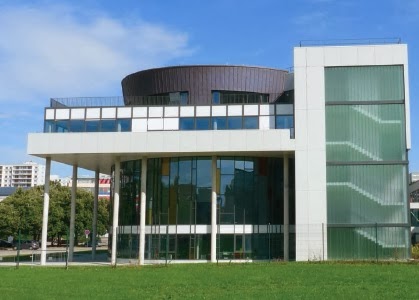
The
University of Strasbourg in Strasbourg, France, is among Europe’s foremost research universities and is the second-largest university in France with some 43,000 students. The University’s Energy Department
needed to better manage facility operations for 140 buildings on multiple
campuses spread across 60 miles of Strasbourg and the surrounding area. No
centralized method existed for monitoring and collecting data on assets, HVAC,
electricity and other facility processes that would allow staff to review
trends and identify better practices for saving time, money and energy.
"Wonderware System Platform enables the University’s Energy Department to successfully manage operations at our 140 buildings by accurately processing technical data in real-time for assessment. We can now more effectively manage University assets and operations ensuring the comfort of our students, educators, staff and visitors each day."
– Damien Bertrand, Energy Department Manager, University of Strasbourg
The search for an open, scalable supervisory control and
monitoring system led them to Wonderware® System Platform
which provided extensive capabilities and met the University’s need for a solution
that collects and manages data from all building systems and assets, and that
easily integrated with the University’s existing asset data management program. System Platform efficiently centralizes data
gathering and enables extensive data analysis to improve overall asset and
energy efficiencies at the University’s distributed campus buildings – everything
is built and managed within the same software infrastructure.
Wonderware
System Platform
also features one of the industry’s most powerful data historian applications,
Wonderware Historian, which provides Energy Department staff actionable
information with rich data analysis and reporting capabilities. And there is
Wonderware InTouch®, an open, extensible supervisory human machine interface
(HMI) and supervisory control and data acquisition (SCADA) solution that
provides user-friendly views
of the University’s building control systems to staff and management from any
location in real-time.
Earlier this
month, the Smart Cities Council announced that leaders from a number of cities
across the U.S. are evaluating a beta version of the Council’s Readiness Guide.
The Readiness Guide is a how-to manual for building tomorrow’s cities today by
enabling cities to self-assess their readiness to innovate. Mayors and their
smart city teams from Hartford, Dallas, Baltimore, Orlando, and Green Bay have
been evaluating the Guide’s usefulness to determine the next steps toward
transformation. The Readiness Guide, created by the Smart Cities Council
Advisory Board and Partners, offers a unique holistic view of a city’s future –
including the built environment, energy, transportation, communications, water,
health and human services, and public safety.
The Smart
Cities Council will continue to work with city leaders across the U.S. to gain
feedback, followed by Europe, Asia and Latin America. The Readiness Guide will
be officially launched next month to cities worldwide at the Smart City Expo World Congress in Barcelona, Spain.
For more
information, read the complete news release on www.smartcitiescouncil.com.
Invensys is an Associate Partner of the Smart Cities Council.
When
the City of Bremen needed to modernize the heating systems in several of its
buildings, it analyzed the project and realized an opportunity.
Besides improving energy efficiency, there was the potential to implement a new
building management system (BMS) that would bring greater control and provide
far-reaching positive effects across the city’s extensive portfolio of
properties – more than 1,200 municipal facilities covering over 1.8 million square meters
(nearly 20 million square feet) of floor space. At the time, six control stations across the city were running a variety
of proprietary building control systems, making reporting and sharing of information in a
consistent format a challenge, and adding
new buildings complicated and costly.